Choosing between a wedge wire screen (slot tube/profile wire) and perforated metal depends primarily on particle shape, clogging risk, operating pressure, and backwashing requirements. While perforated metal serves well as a cost-effective coarse strainer or structural support layer, wedge wire screens are the superior engineering choice for continuous, non-clogging water filtration and solid-liquid separation.
As a specialized manufacturer of both wedge wire screens and precision perforated plates, HEBEI JIKE TRADE CO., LTD recommends evaluating your filtration system across five critical technical parameters before finalizing specifications.
1. Clogging Resistance & Slot Geometry
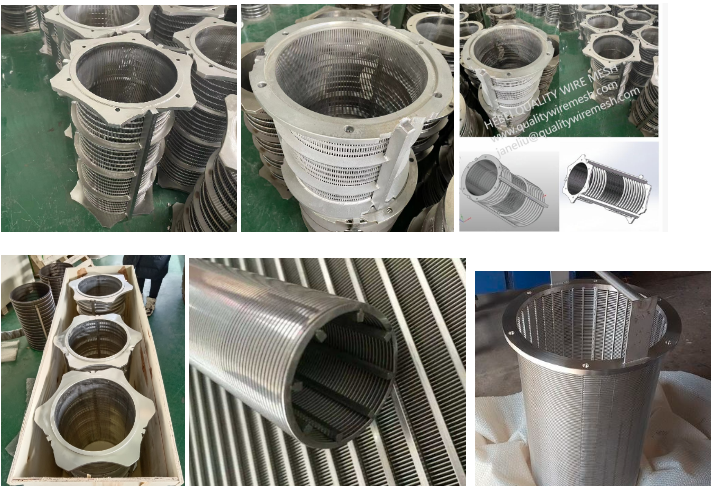
- · Wedge Wire Screen: Constructed by resistance-welding V-shaped profile wires onto support rods. The V-shaped slot widens inward, creating only two-point contact with particles. Any particle smaller than the slot passes cleanly through without wedging, making backwashing fast and efficient.
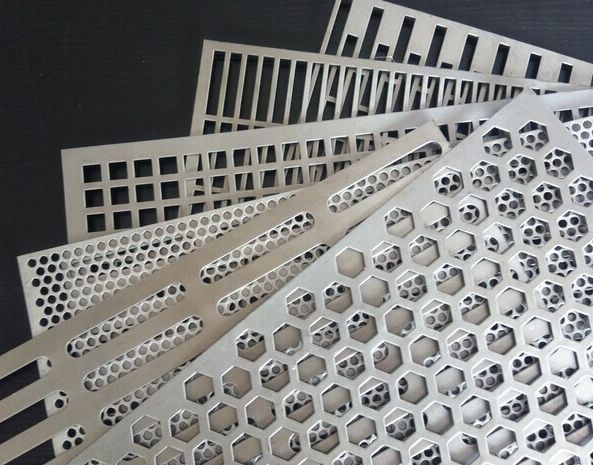
- · Perforated Metal: Punched with straight-walled cylindrical or slotted holes. Irregularly shaped suspended solids easily lodge inside straight-walled apertures, causing progressive blinding and frequent downtime for manual cleaning.
2. Open Area & Pressure Drop
- · Wedge Wire Screen: Achieves high open area (often 15% to 45% depending on wire width and slot size) even at fine filtration ratings down to 0.05 mm (50 microns). This minimizes head loss and energy consumption across pumps.
- · Perforated Metal: Due to mechanical punching limits, hole diameter generally cannot be smaller than sheet thickness (unless using specialized micro-perforation). At fine aperture sizes, open area drops sharply, increasing differential pressure.
Engineering Comparison Matrix
|
Selection Factor |
Wedge Wire Screen (Johnson Type) |
Perforated Metal Sheet / Cylinder |
| Minimum Aperture | Down to 0.02 mm – 0.05 mm | Typically ≥ 0.5 mm (standard punching) |
| Clogging Risk | Very low (self-cleaning V-slot) | Moderate to high (straight hole walls) |
| Collapse Strength | Extremely high (continuous support rods) | Moderate (depends on plate thickness) |
| Cost Efficiency | Higher initial cost, lower lifecycle cost | Lower initial cost for coarse screening |
| Typical Water Uses | Water well screens, resin traps, intake screens, DSM sieve bends | Coarse debris strainers, filter media support plates, aeration diffusers |
Summary Recommendation
- · Choose Wedge Wire Screens from HEBEI JIKE TRADE CO., LTD for groundwater intake wells, ion-exchange resin traps, wastewater rotary drum screens, and high-pressure backwashable strainers where uptime and fine slot accuracy are critical.
- · Choose Perforated Metal when filtering coarse debris (>2 mm), building structural support baskets for filter bags/mesh, or working within strict capital budget limits on low-solids water lines.
Post time: Nov-27-2026